

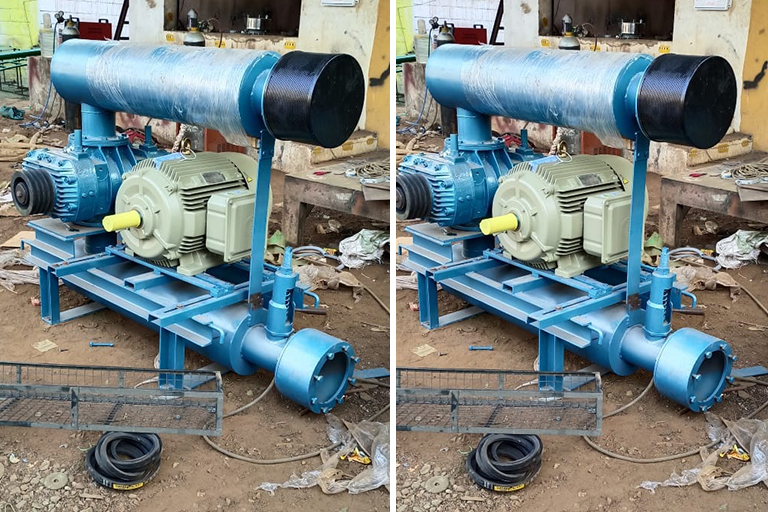
Air Blower
Air blowers are available in many configurations of velocity, pressure, airflow direction and speed. Blowers can perform as permanent, mounted fixtures; many blower systems, especially large systems, are built into the structure of the buildings in which they are used.
Others can be mounted on ceilings or walls. Still more fans are easily movable, either for the purposes of providing temporary airflow in a certain area or to dry a surface after a spill or carpet after cleaning.
Axial fans take their name from the word axis, which is the thing around which fan axial fan blades spin. Axial fans work by spinning their curved blades, which creates areas of positive and negative pressure.
This imbalance of pressure forces atmosphere in one direction; that movement of atmosphere is also known as air circulation.
Radial fans serve the same purpose, but they are configured in a different way. While axial fan blades are positioned vertically (that is, a person standing in front of an axial fan at eye level would see the surface of the fan blades), radial fan blades are positioned horizontally (which means that a person looking at a radial fan blade at eye level would see the blade from the side).
The result of this change in configuration is a change in the direction of airflow. Because most radial fan blades are curved, the air in a radial blower enters from the side of the fan (which is usually partially covered by grating or wire) and leaves the tips of the fan's blades through a chute.